
Categories
DiscoverPublished February 27, 2026
Everything You Need to Know About Living in Belmont, MA

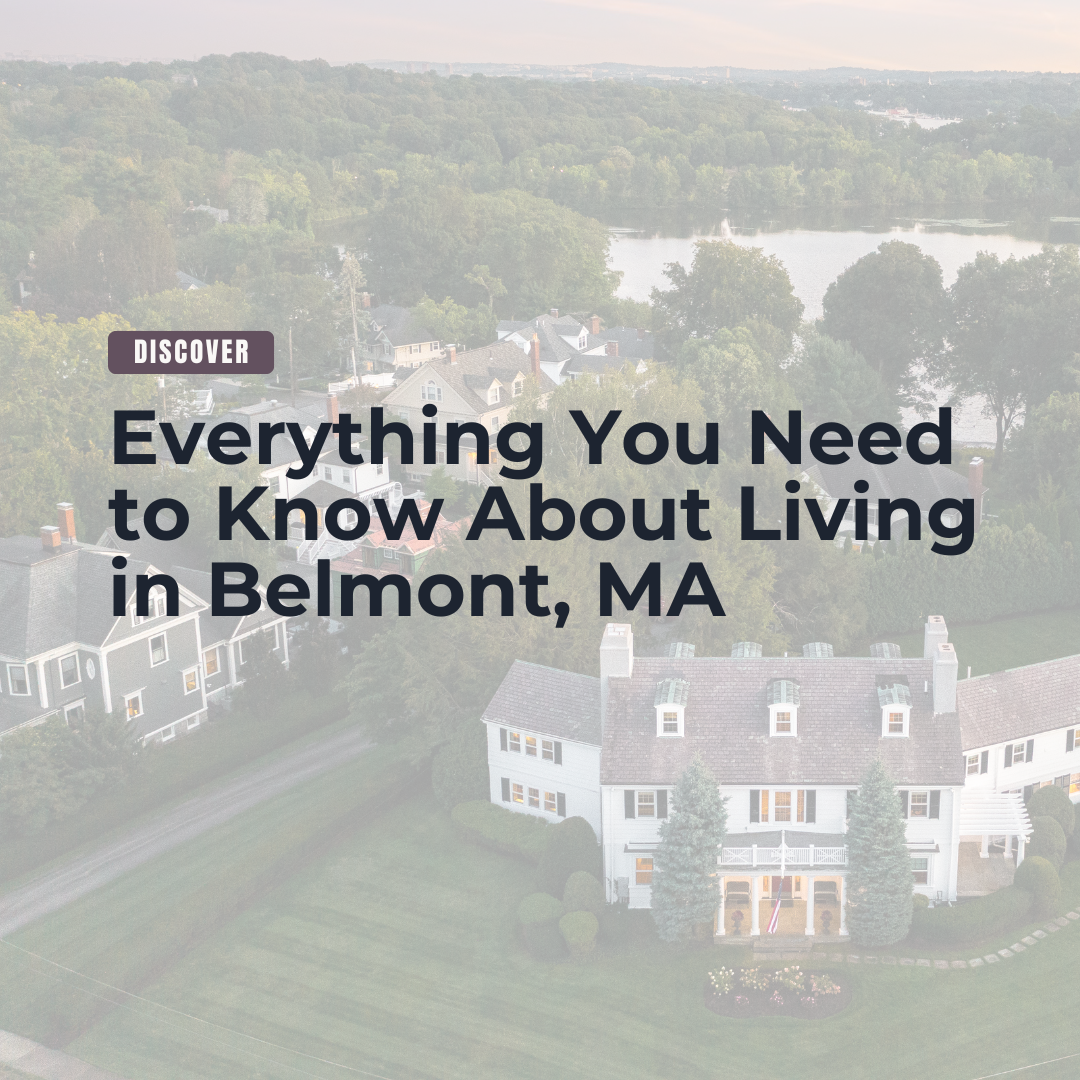
Everything You Need to Know About Living in Belmont, MA
Belmont looks like a compromise town. In reality, it's a very specific lifestyle choice, and it works incredibly well for some people and not at all for others.
On paper, Belmont checks many boxes: strong schools, close to Cambridge and Boston, solid housing stock, and a reputation for being quiet and stable. That combination pulls in buyers who think it's a safe middle ground, especially when priced out of neighboring areas.
The problem? If you move here assuming it's just a softer version of Cambridge or a more convenient suburb, you can end up frustrated fast. Daily life here feels different. How you commute, where you spend your weekends, how often you leave town, and even how connected you feel to the community all play out in very specific ways. When Belmont is the wrong fit, people don't regret the house. They regret the town.
After helping buyers choose between Belmont, Arlington, Cambridge, Lexington, and Watertown for years, I see who thrives here and who quietly starts planning their next move within a few years.
Belmont in One Sentence
Belmont is quiet, residential, and inward-focused. It's not trying to be trendy or buzzy. Most daily life happens at home or nearby, not around town.
Here's the key insight: Belmont is a town where your house matters more than the town itself.
When people talk about why they love living in certain towns, they usually mention the town center, restaurants, coffee shops, weekend energy. In Belmont, people talk about their yard, their kitchen renovation, their street, their neighbors. The town provides the framework (safety, schools, proximity) but your actual quality of life is determined by what's inside your four walls and how you've set up your routines.
Belmont does have small centers like Belmont Center and Waverley Square, but they function more as conveniences than destinations. You won't find the kind of energy that pulls you there on a Saturday afternoon just to hang out.
Belmont doesn't ask you to engage with it. It doesn't pull you into town for events or nightlife or spontaneous interactions. It lets you live quietly, and for many people, that's exactly what they want.
But if you get energy from being around things (walking to dinner, running into people, having options within a five-minute radius) Belmont can feel flat. You'll drive to Cambridge, Watertown, or Arlington Center for those experiences. Over time, that adds friction.
The key understanding: Belmont is designed for people who want to retreat, not for people who want to be in the mix.
Location and Commute Reality
Belmont is geographically close to Cambridge and Boston. It borders Cambridge directly. But proximity on a map doesn't always translate to convenience in daily life.
What works well: Belmont has commuter rail access on the Fitchburg Line. If you're commuting into North Station or downtown Boston, that can work. You also have easy access to Route 2, connecting you west toward Lexington and Concord, and east toward Fresh Pond and Alewife.
What surprises people: Belmont is not a "hop on the Red Line and go" town.
The nearest Red Line stop is Alewife, technically in Cambridge. Depending on where you live in Belmont, getting to Alewife might mean a 10-minute drive, finding parking, and then taking the T. Or it means taking a bus. Either way, it's not seamless.
If you're used to living on a subway line where you can walk out your door and be in Harvard Square or Davis Square in 15 minutes, Belmont doesn't offer that. You're adding steps, and those steps matter more than people expect.
Your exact street changes your daily rhythm too. Closer to Belmont Center or Waverley Square, you have a little more walkability to small conveniences. Farther out toward the Lexington line or near Rock Meadow, you're driving for almost everything.
Belmont can be incredibly convenient or quietly annoying, depending on how you live and work. If you drive everywhere and your job is accessible by car or commuter rail, Belmont's location is a strength. If you rely on the T, walk to most things, or expect spontaneous access to Cambridge or Somerville, Belmont will feel like more work than you planned for.
Housing Stock and Daily Living
The housing stock here is primarily single-family homes. You'll find some condos and occasional newer construction, but they're limited. The town is mostly detached houses on smaller lots. Most homes were built mid-1900s. They're well-maintained but not flashy.
In practice, people buy here to settle, not to experiment. Renovations are common. You'll see updated kitchens, finished basements, and backyard projects. People invest in their homes because they're planning to stay.
The trade-off: You're trading size or finishes for location and schools. You might get a smaller house in Belmont than you would farther out, but you're getting proximity to Cambridge and access to a strong school system. For families who prioritize education and want to stay close to the city, that trade-off makes sense.
But it also means your daily experience is shaped by the house itself. If the house doesn't work for you (cramped layout, lacking outdoor space, bigger renovation budget than expected) that affects how you feel about living here.
In other towns, you might tolerate a house that's just okay because the town offers so much. In Belmont, the house is the main event. If you're not happy at home, there's not much pulling you out into the town to compensate.
Who Belmont Works Best For
Belmont tends to work best for people who:
- Prioritize schools and stability: If you're moving for the school system and want a predictable, safe environment for your kids, Belmont delivers.
- Spend more time at home than out: If your ideal weekend involves projects around the house, time in the yard, or quiet family routines, Belmont supports that lifestyle.
- Want proximity to Cambridge without Cambridge energy: You're close enough to access Cambridge or Somerville when you want to, but you're not living in the middle of it.
- Are comfortable driving for restaurants, nightlife, or variety: If you don't mind getting in the car to meet friends or try new places, Belmont's lack of local options won't bother you.
If your lifestyle is home-centered, Belmont can feel grounding. If your lifestyle is city-centered, it can feel limiting.
The people who thrive here have already made peace with the fact that their social life, entertainment, and sense of connection will come from their home, their family, and their immediate neighborhood, not from the town itself.
If you're still in a phase of life where you want to be out multiple nights a week, where you value spontaneity, or where being around people and activity gives you energy, Belmont is going to feel like a mismatch. You'll end up driving to other towns constantly, and eventually you'll wonder why you're not just living there instead.
Schools, Community and Social Life
The schools here are strong. The public school system has a solid reputation, and that's one of the main reasons families move here. You'll see high parent involvement, good resources, and a focus on academics.
The community itself is present but not loud or performative. People are polite, involved, and supportive, but the social structure here is quieter than in some neighboring towns. You won't see many town-wide events or a buzzy social scene that pulls everyone together regularly.
Important nuance: Social life in Belmont often forms through kids, schools, and neighbors. If you have children in the school system, you'll meet other parents. If you're active in your neighborhood, you'll connect with people on your street. But if you're child-free, new to town, or expecting more organic social mixing, it can take longer to feel connected.
That's not unique to Belmont, but it's more pronounced here because there's no strong commercial town center that naturally pulls people together. There's no main street lined with cafes and shops where you run into neighbors. The social fabric exists, but you have to work harder to tap into it.
For families with kids, that's usually fine. Your life revolves around school activities, playdates, and youth sports. But for people without kids, or for people used to meeting friends through spontaneous interactions in public spaces, Belmont can feel isolating.
What People Misread About Belmont
The most common misreads:
"It's basically Cambridge-lite." People assume that because Belmont borders Cambridge, it will feel like a quieter version of the same thing. It's not. Cambridge has density, walkability, and constant activity. Belmont has space, quiet, and distance from that energy. The two towns feel fundamentally different in daily life.
"We'll be out all the time anyway." Many buyers convince themselves they'll just drive to Cambridge or Somerville whenever they want restaurants or nightlife. In theory, that's true. In practice, the friction adds up. Driving 15 minutes each way, finding parking, planning around timing. Over time, people go out less than expected. When that happens, Belmont starts to feel more limiting.
"It's just temporary." Some people buy in Belmont thinking it's a stepping stone, planning to move in a few years once they can afford Cambridge or a different town. But life happens. Kids start school. Routines get established. Moving becomes harder. If Belmont wasn't the right fit to begin with, those few years can feel longer than planned.
Belmont shapes habits faster than people expect. If you thrive on being around activity, Belmont will slowly train you to stay home more. For some people, that's fine. They adjust. For others, it creates low-level frustration that builds over time.
When Belmont doesn't work, it's rarely dramatic. It just doesn't click. People don't hate it. They just feel like they're missing something. A few years later, they're quietly looking at other options.
The way to avoid that is honest self-assessment before you move. Don't assume you'll adapt. Don't assume proximity to Cambridge is enough. Ask yourself: can I be happy spending most of my time at home and in my immediate neighborhood? If yes, Belmont could be great. If no, keep looking.
Belmont vs Nearby Towns
Quick comparisons for context:
vs Cambridge: Belmont is calmer, quieter, and less spontaneous. You're trading walkability and urban energy for space and residential calm.
vs Arlington: Arlington has more town-center energy. Arlington Center has restaurants, shops, and more of a gathering-place feel. Belmont is more spread out and inward-focused.
vs Watertown: Watertown has more mixed-use development and wider housing options. Belmont is more purely residential and focused on single-family homes.
vs Lexington: Lexington is farther out and feels more suburban, but has a stronger town center. Belmont is slightly more connected to Cambridge and slightly denser.
Belmont sits in between, but that "in between" isn't neutral. It's a choice. You're not getting the best of both worlds. You're getting a specific lifestyle that prioritizes residential calm and proximity to Cambridge over town-center activity and walkability.
Who Thrives in Belmont Long-Term
People who thrive in Belmont:
- Like predictability and value routine, stability, and knowing what to expect
- Build routines around home, with life centering on family time, home projects, and neighborhood walks
- Value calm over convenience and are willing to trade spontaneous access to restaurants and nightlife for quiet streets
- Want stability more than stimulation, having moved past the phase where constant options and activity feel necessary
For the right person, Belmont feels peaceful. For the wrong person, it feels isolating.
The people who love it here aren't trying to convince themselves it's enough. They're the ones who feel like they finally found a place that matches the life they actually want to live.
If this sounds exactly like what you're looking for, Belmont is worth serious consideration. If you're not sure you're ready for that, be honest with yourself now, not after you've signed the papers.
Comparing Belmont to Arlington, Watertown, or Lexington? Download our Boston Relocation Guide for detailed breakdowns of how these towns actually live, not just how they look on paper. It covers commute patterns, lifestyle differences, and what tends to surprise buyers after they move. Schedule a consultation to discuss whether Belmont's specific lifestyle fits your actual needs.

Kimberlee Meserve
| Street Property Team | Keller Williams Realty
or another way